Volume 23, Issue 2, 1998
July/August 1998


Encouraging Progress and Resolution: Commission Issues Ninth Biennial Report on Great Lakes Water Quality

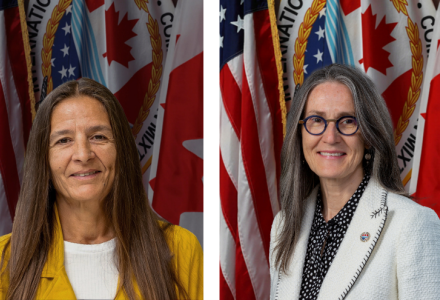
by Pierre Béland and Susan Bayh

A Great Lakes Water Quality Agreement has been in place for more than 26 years. Although it has been changed and updated during this time, the current Agreement is sound, effective and flexible review and renegotiation are not necessary concludes the International Joint Commission in its Ninth Biennial Report on Great Lakes Water Quality. The governments of the United States and Canada need, however, to renew and fulfill their commitments and focus on implementing, enforcing and taking other actions, including a review of institutional arrangements, to achieve the purpose of the Agreement.

The Agreement commits the U.S. and Canada "to restore and maintain the chemical, physical and biological integrity of the waters of the Great Lakes Basin Ecosystem." Progress in the Agreement's implementation has included many success stories and positive signs that the lakes are returning to better health. This progress also clearly reflects continued public concern over the health and welfare of the environment, and the courage and willingness of governments in the past to deal with Great Lakes environmental problems.

In addition to the roles and responsibilities of the governments of the United States and Canada, the Ninth Biennial Report recognizes the all inclusive nature of progress thus far. The governments cannot afford to retreat from their mutual commitments to protect the Great Lakes and neither can anyone else.

The Great Lakes community is bound together by the common goal of restoring and protecting the Great Lakes. All players have roles and responsibilities and can make positive contributions to the solutions from their own perspective. This bottom-up, partner-based, inclusive approach to governance includes such key players as local, state and provincial governments, industry, environmental nongovernment organizations, labor, Native Americans and First Nations, the general public and the Commission itself. The Commission suggests ways in which these and other members of the Great Lakes community can contribute to insure that restoration and protection of the Great Lakes becomes a reality.

Under the Agreement, the Commission has sent 155 recommendations to the governments during the last 16 years, many of which have been incorporated into existing or planned programs. However, government responses to the recommendations are generally not specific. This makes it difficult for the Commission and the public to track and evaluate progress from a program and policy perspective and to assess when commitments in the Agreement have been met.

A major theme of the Ninth Biennial Report is how do we as a society move from where we are now to meeting the objectives of the Agreement. In other words, how do we get from here to there and how do we measure and assess progress. The Commission explores a number of ways to help the Great Lakes community achieve the future that it has been working toward for a quarter century. The report discusses: government and its regulatory framework, responsibility and voluntary partnerships; contaminant sources, pathways and reservoirs; geographic Areas of Concern and Lakewide Management Plans; essential science and research programs, science-policy links, models and surveillance and monitoring; specific pollutants such as dioxins and furans, mercury, PCBs and radioactivity; communication, transition and socioeconomic values; and governance and the role of key basin stakeholders. Viewing each as part of a strategy, the Commission presents pragmatic perspective and advice in the context of "think globally and act locally." Action in all of these areas should provide measurable proof of change toward the better.

The "three Ds" of deregulation, devolution and downsizing have been common in the last several years. These processes have their good points, but overall, the ability of governments at all levels to deliver on commitments is being stressed. Programs to restore and protect the Great Lakes have drastically slowed or halted, especially initiatives for restoring Areas of Concern. The three Ds also make it difficult for the public to understand who is doing what, who they can talk to and where they can get information. Leadership by the federal governments is important to insure that things get done. Budgetary and policy initiatives in both countries threaten the progress achieved to date and future viability of the Agreement.

A major focus of the Commission since its Fifth Biennial Report in 1990 has been the need to address the issue of persistent toxic substances. This issue has not been resolved and the Commission again stresses the importance of achieving the virtual elimination of inputs of these substances. In this report, the Commission equally recognizes the impact on the Great Lakes ecosystem of many other stressors, including land use patterns, increasing shoreline development, habitat modification, biological contamination and nutrient input. All must be considered and resources to manage these issues should not be transferred from one issue to another as society strives to move from our present situation to the clean and healthy environment in which we all want to live.

The report includes 19 targeted recommendations that, when implemented, will allow the Commission to measure progress toward the Agreement's purpose. Committed research, surveillance and monitoring, and the development and application of ecosystem models are essential elements for measuring and defining progress. Focused efforts on dioxins, furans, mercury, PCBs and radioactivity are a starting point. Pollution from the air, contaminated sediment and agricultural practices need to be addressed through detailed work plans, schedules and benchmarks toward defined goals. The restoration of Areas of Concern requires a renewed commitment and dedication of resources to overcome specific obstacles to progress.

Injury has occurred in the past, is occurring today and, unless society acts now to further reduce the concentration of persistent toxic substances in the environment, the injury will continue in the future. The fact that such injury is occurring, coupled with lack of knowledge about other, as yet unrecognized effects, is a call for action by all basin stakeholders to minimize and eliminate injury.

The Commission is not just looking for plans, it is looking for action and measurable progress towards the goals of the Agreement. To do this, strong government leadership is needed, coupled with active public awareness and support of environmental issues and the programs to address them. Communication, public participation and productive partnerships are keys. Our understanding of the concept of governance continues to change and so must institutional structures and society's way of thinking. Transition to a cleaner and more environmentally benign society entails costs and risks and will involve an orderly process along a designed path that allows society to move toward sustainable development. This report recognizes that all stakeholders in the Great Lakes basin have roles and responsibilities to insure that restoration and protection of the Great Lakes becomes a reality.

The Commission's report is issued biennially, as required by the Great Lakes Water Quality Agreement.

Pierre Béland is a Commissioner in the International Joint Commission's Canadian Section and Susan Bayh is a Commissioner in the U.S. Section. To receive a copy of the Ninth Biennial Report on Great Lakes Water Quality, contact the Commission's Washington, Ottawa or Windsor office, or visit www.ijc.org on the World Wide Web.