|
![]() June/July 1995 |
For over a decade, the International Joint Commission has been encouraging the development of Remedial Action Plans (RAPs) that incorporate the evolving community contexts of local pollution remediation and prevention as well as technical issues, and provide for meaningful public involvement. These have been seen as ways to achieve an ecosystemic approach to RAPs and to ensure that solutions are both feasible and supported over the long term by local communities.
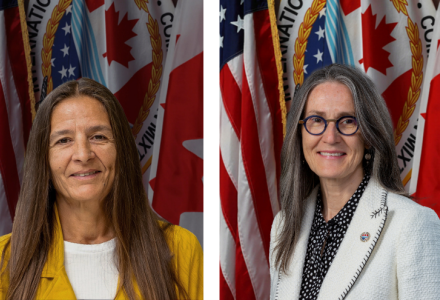
| John Jackson , President of Great Lakes United, and participant in RAPs for the past eight years | Charles R. Ledin, Chief, Planning and Policy Section, Bureau of
Water Resources, Wisconsin Department of Natural Resources |
| Undoubtedly major improvements are occurring in many of the RAP
communities. But can the RAP process claim the credit for those
changes? The cleanups that are occurring and the decreases in
pollution discharges are overwhelmingly the result of public
pressure, negative media attention and government requirements
rather than the RAP process itself. These improvements are listed
in the RAP documents, but this does not mean that RAPs should
take the credit for having made them happen.
The RAP process is consuming incredible numbers of volunteer hours. The fundamental question for citizens' groups is whether this is the most productive place for us to put our time. Most of us conclude that RAPs are a useful forum through which to communicate with and work with other concerned citizens, with the polluters and with the governments. But when we assess the causes of the changes that are occurring in our communities, we question the all-consuming energy that RAPs take. Many citizens are now concluding that we need to put more of our energies into raising the profile of the environmental problems and pushing at the political level for the cleanup outside the RAP process. |
RAPs have brought communities together in understanding and
attacking regional environmental problems. Does this mean that
everyone is happy with progress? The obvious answer is no. While
RAPs have been a great vehicle for identifying both the nature
and severity of environmental concerns, they have also been the
vehicle for causing frustration because the solutions aren't
readily available. There is an impatience for the "desired future
state." Out of that impatience, a new model is growing:
implementation partnerships.
The RAP process has created the need for new environmental management teams: industry working with communities, communities working with communities and citizens involved at all levels. Examples like the Fox River Coalition and Fox Wolf 2000 in Wisconsin demonstrate the strength of partnership and the exciting possibilities for both identifying and implementing watershed solutions. The RAPs have brought diverse people together to create regional teams with greater technical strength, economic strength and political strength: a unity based on a common vision for the future. So do I think RAPS are working for Great Lakes communities? You bet I do! |
Revised: March 20, 1997
Maintained by Kevin McGunagle,
mcgunaglek@ijc.wincom.net