Volume 20, Issue 1, 1995
March/April 1995


Join the International Joint Commission
on the Shores of Lake Superior
for the 1995 Biennial Meeting on Great Lakes Water Quality


by Sally Cole-Misch

"The Commission shall make a full report to the Parties and to the State and Provincial Governments no less frequently than biennially concerning progress toward the achievement of the General and Specific Objectives including, as appropriate, matters related to Annexes to this Agreement. This report shall include an assessment of the effectiveness of the programs and other measures undertaken pursuant to this Agreement, and advice and recommendations."
Article VII (3), Great Lakes Water Quality Agreement of 1978, as revised by Protocol between the United States and Canada in November 1987

"In the discharge of its responsibilities under this Reference, the Commission may exercise all of the powers conferred upon it by the Boundary Waters Treaty ... including the power to conduct public hearings and to compel the testimony of witnesses and the production of documents."
Article VII (2), Great Lakes Water Quality Agreement of 1978, as revised by Protocol in November 1987


The International Joint Commission, in cooperation with the communities of Duluth, Minnesota and Superior, Wisconsin, are excited to host the 1995 Biennial Meeting on Great Lakes Water Quality from Friday, September 22 through Monday, September 25. This year's meeting, entitled "Our Lakes, Our Health: The Future is Now," will provide traditional and new opportunities for presentation and dialogue on topics related to the quality of the Great Lakes Basin Ecosystem. It is also the first time the Commission will meet at the headwaters of the Great Lakes, on the western shores of Lake Superior.

As highlighted sections of the Agreement outline above, the Commission must report every two years on progress under the Agreement. To accomplish this, it requests information and perspectives from all sectors of the Great Lakes community, in a variety of ways. Written materials -- such as reports from its Great Lakes advisory groups, the governments' reports from their State of the Lakes Ecosystem Conference, project reports from specific organizations, and letters from others -- contribute a wealth of information. Biennial meetings provide an additional opportunity for the Commission to hear a wide range of viewpoints on Agreement progress, and to learn about others' efforts to achieve Agreement goals. It will use all information received to produce its Eighth Biennial Report on Great Lakes Water Quality, to be released approximately six months after the meeting.

Just as projects and people evolve, the Commission's biennial meetings have grown and progressed over the years. This year's meeting maintains successful elements of previous agendas, and also includes new segments to encourage indepth dialogue and discussion among all meeting participants.

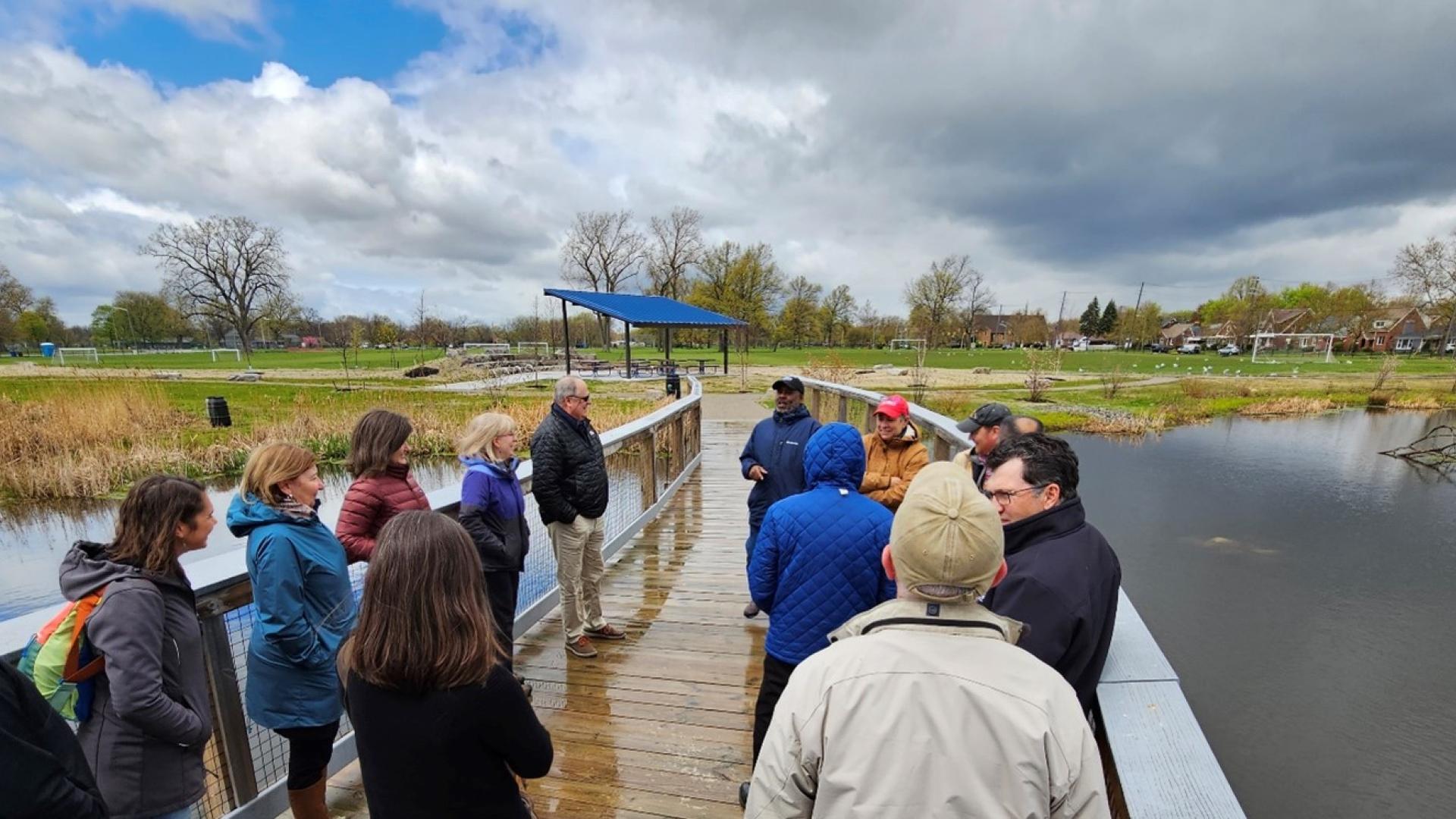
One exciting departure from previous meetings is the opportunity, on the first day, to visit and meet with citizens in the western Lake Superior region who are carrying out model programs to achieve the goals of the Great Lakes Water Quality Agreement. The Friday, September 22 agenda will also include visits to enjoy the local scenic beauty, and an evening concert.

Saturday's sessions include a panel presentation on issues related to human health, insight presentations from key societal sectors, and a dinner celebration highlighting the beauty of Lake Superior. Concurrent sessions, an all-day Forum on Remedial Action Plans, and an open public hearing at which individuals can address Commissioners directly will fill Sunday's schedule; Monday will close out the meeting with additional concurrent sessions and a final plenary to hear summaries and findings from each session.

Concurrent sessions on Sunday and Monday will cover a variety of topics, including atmospheric pollution, exotic species, sustainable business practices, Native American initiatives, education, pesticides and biodiversity. Keynote speakers are also being invited. All parts of the meeting are designed to ensure that the Commission hears about innovative and creative efforts by all societal sectors to restore and protect the Great Lakes Basin Ecosystem.

As in previous years, other organizations are welcome to schedule ancillary events before, after or during open times of biennial meeting dates. All information received on these events by April 28, 1995 will be included in future registration and program materials. Please forward information to Sally Cole-Misch at the Commission's Great Lakes Regional Office.

The Commission welcomes participation and input into its biennial meeting and reporting process, and encourages you to join us in Duluth-Superior this September. As always, the meeting is free of charge. Look for registration and program details this June in the summer issue of Focus.

1995 Biennial Meeting on Great Lakes Water Quality
Our Lakes, Our Health: The Future is Now
Duluth Entertainment and Convention Center
Preliminary Program


FRIDAY September 22, 1995
  • Model Youth and Community Programs
  • Concert
SATURDAY September 23, 1995
  • Introduction to Plenary and Concurrent Sessions
  • Panel Discussion on the Role of Persistent Toxic Substances in Human Health
  • Insight Presentations
  • Dinner with Lake Superior Presentations
SUNDAY September 24, 1995
  • Concurrent Sessions on atmospheric deposition, biodiversity, human health, pesticides, sustainable business practices, 1995 Youth Summit forums
  • Forum on Remedial Action Plans
  • Public Hearing
MONDAY September 25, 1995
  • Concurrent Sessions on exotic species, Lake Superior, Lakewide Management Plans, Native American initiatives, pollution prevention, watershed planning
  • Closing Plenary


Revised: April 8, 1997
Maintained by Kevin McGunagle, mcgunaglek@ijc.wincom.net